


Fire departments around the country respond to an average of 835 home fires a year due to fires related to holiday decorations (not including Christmas trees), according to the National Fire Protection Association.
“These fires caused an annual average of 3 civilian fire deaths, 30 civilian fire injuries and $14 million in direct property damage,” according to the association.
If you look around your home, you’ll probably be able to spot some decorations or other holiday customs that open you up to more fire risk than you initially realized: Christmas lights, fireplaces, holiday candles, crowded holiday meals and so on. As such, it’s good to stay vigilant throughout the holidays to ensure everyone stays safe.
“Nationally, you kind of see cooking fires, electrical fires [and] candle fires,” said Joe Vance, Covington Fire Department’s assistant chief of fire prevention.
Part of Vance’s job is to determine the origins of fires and then make community programs to educate people on fire prevention. Given the holidays come with their own fire risks, he offered some advice and resources for local families.
If you have an artificial Christmas tree, check to see that it’s been certified as flame-resistant by a reputable safety lab. There should be a label on the packaging. One of the most common certifications comes from Underwriting Laboratories, often shortened to UL, a legacy safety testing organization. Note: Flame resistant doesn’t mean fireproof, so you’ll need to employ other safety protocols to avoid accidents. Holiday lights and other lighted decorations should also be checked for certification from a reputable safety lab.
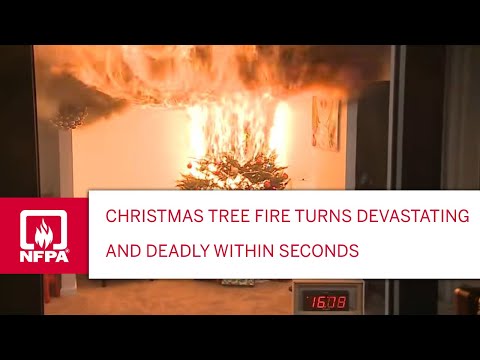
If you have a live tree, keep it watered daily. Dry trees can catch fire quickly and cause a lot of damage in a short time. In the video below, a dry tree that catches fire in a living room engulfs the whole room in flames in about fifteen seconds. Keeping your live tree watered will reduce your risk. Live trees should also be kept away from fire places, radiators, space heaters and candles.
Next, check to see where it’s safe to display your lights.
“You don’t want to use outdoor lights inside, or vice versa,” Vance said.
Lights designed for display outdoors are often made from different materials and can generate more heat than indoor lights. Replace all burnt-out or missing bulbs on decorative lights. If the wires are frayed or otherwise damaged, refrain from using them at all. Additionally, don’t overload your electrical outlets with a lot of extension cords and multi-plugs for your decorations, as these can increase your risk of an electrical fire.
“December is the peak time of the year for home candle fires,” Vance said.
Candles are an integral part of both holiday decorations and year-end religious practices, so it’s important to be informed about candle safety.
“It’s important to keep candles at least one foot away from anything that can burn,” Vance said. “Be cognizant of window curtains, towels, rags and other decorations that you may have out. NFPA recommends one foot around around the candle be cleared. And if you’re using candles, use holders that are sturdy and only place them on uncluttered surfaces, again, just to keep the distance away and keep the flame away from catching other combustible items.”
Vance added that candles should be kept out of the reach of pets and kids. Never leave candles unattended, and always blow them out before leaving your home or turning in for the night. Ditto for electric lights.
If you’re buying electronic gifts that use rechargeable lithium-ion batteries, make sure they’ve also been tested by a reputable certifying laboratory, just like lights and decorations. This is especially important when ordering things online. Depending on where an item is manufactured, it may not be subject to thorough safety testing.
Moreover, ensure that all chargers, cords and connectors match their proper devices. Don’t swap chargers and connectors willy-nilly. If a battery or device is unusually hot, damaged or leaking fluid, that’s your cue to discontinue using it.
Finally, it’s good to practice general, year-round fire safety tips around the holidays, as well. Check to make sure all your smoke and carbon monoxide detectors are working properly. Carbon monoxide detectors should be placed on every level of the home, in sleeping areas, and in the home’s central room. Smoke detectors should be tested monthly, and batteries should be replaced twice a year. Smoke detectors older than ten years old should be replaced outright.
Check out some downloadable fact sheets from the National Fire Protection Association below for more in-depth advice on staying safe over the holidays: