


“The IRS [site], when it was the IRS, had thousands of employees,” said Covington Commission Member Steve Hayden at an open house event for the Brent Spence Bridge in August.
At the time, Hayden had not yet taken his seat on the commission, but he had been following developments related to the KY-8 Bridge, known more commonly as the 4th Street Bridge, replacement project for some time.
Hayden lives near the bridge and said he’s watched as traffic across the Licking River has changed over the years.
“So, those people didn’t live in downtown Covington,” Hayden said. “They were coming in from somewhere; a good many of them came over the 4th Street bridge.”
The Kentucky Transportation Cabinet selected the final designs for the bridge at the end of last year. The current bridge, built in the 1930s, connects Newport and Covington across the Licking River. Although the bridge is still functional, it’s not up to modern standards: The sidewalks are narrow and not compliant with the Americans with Disabilities Act. Plus, cyclists are forced to integrate into car traffic without any dedicated cycling lanes. All of this makes the bridge treacherous for bike riders, pedestrians and people with disabilities.

The replacement project has been in development for nearly 10 years and includes a public input period. Yet, much debate has ensued about the design of the new bridge, especially as it relates to the number of lanes it ought to have, the amount of traffic it will handle in the face of new developments and how well it will fit into the future of regional transport.
Hayden’s comments, at least as they related to development, represent what many critics are feeling about the state’s plans for the bridge.
“I don’t think the numbers, particularly about the IRS [site], hold up at all,” Hayden said in August.
Let’s unpack the available data on the current bridge, what it might mean and what people are saying about it.
Traffic, trains and lanes
The cabinet’s final design is a four-lane arch bridge with 12-foot shared-use paths for pedestrians and cyclists on either side.
Much of the criticism about the process and reasoning behind the cabinet’s designs has been spearheaded by the Devou Good Foundation, which partners with various regional nonprofits that aim to improve transport infrastructure. The foundation and its supporters have come to multiple public meetings in Covington and Newport to advocate for their own vision of the bridge.
Devou Good and architectural firm Hub + Weber showcased their proposal for the bridge last summer. Hub + Weber’s design features only three traffic lanes and space for an electric street car.

“In the 90s the traffic peaked in like the 25,000 range and now it’s like less than half of that,” Matt Butler, who serves on Devou Good’s Board of Directors, told LINK nky in September.
Much of the criticism has centered around whether four traffic lanes are warranted in the new design. Butler and his supporters don’t think so.
When Butler talked with LINK nky, he pointed to two sources to support his claims, both of which came directly from the transportation cabinet. The first source was annual average daily traffic counts across the bridge, taken from a cabinet sensor station. The cabinet takes counts every two to three years, and the data suggested a downward trend from 1999 onward. The most recent count was in 2022.

His second source was statements and meeting minutes from a 2016 study, which the cabinet commissioned to assess the situation of the bridge and how it should proceed with replacing it.
Butler points to lines in the study’s traffic memorandum appendix, which states, “based on outputs from the OKI Regional Traffic Model, the corridor is not expected to see significant traffic growth through 2040.”
Moreover, Butler indicated that statements from early planning meetings suggested that attendees believed only three lanes would be necessary, something seemingly reiterated in the 2016 study.
“The results of this analysis suggest the current lane configuration can adequately accommodate the future traffic demand through 2040,” pages 34 through 36 of the scoping study reads.

“They basically say the bridge is under capacity,” Butler said in September. “… We should keep it three lanes.”
The foundation set up portable sensors that same month to run its own analysis of the traffic on the bridge. Devou’s collection showed that both speed and overall traffic volume were greater for drivers heading westward.
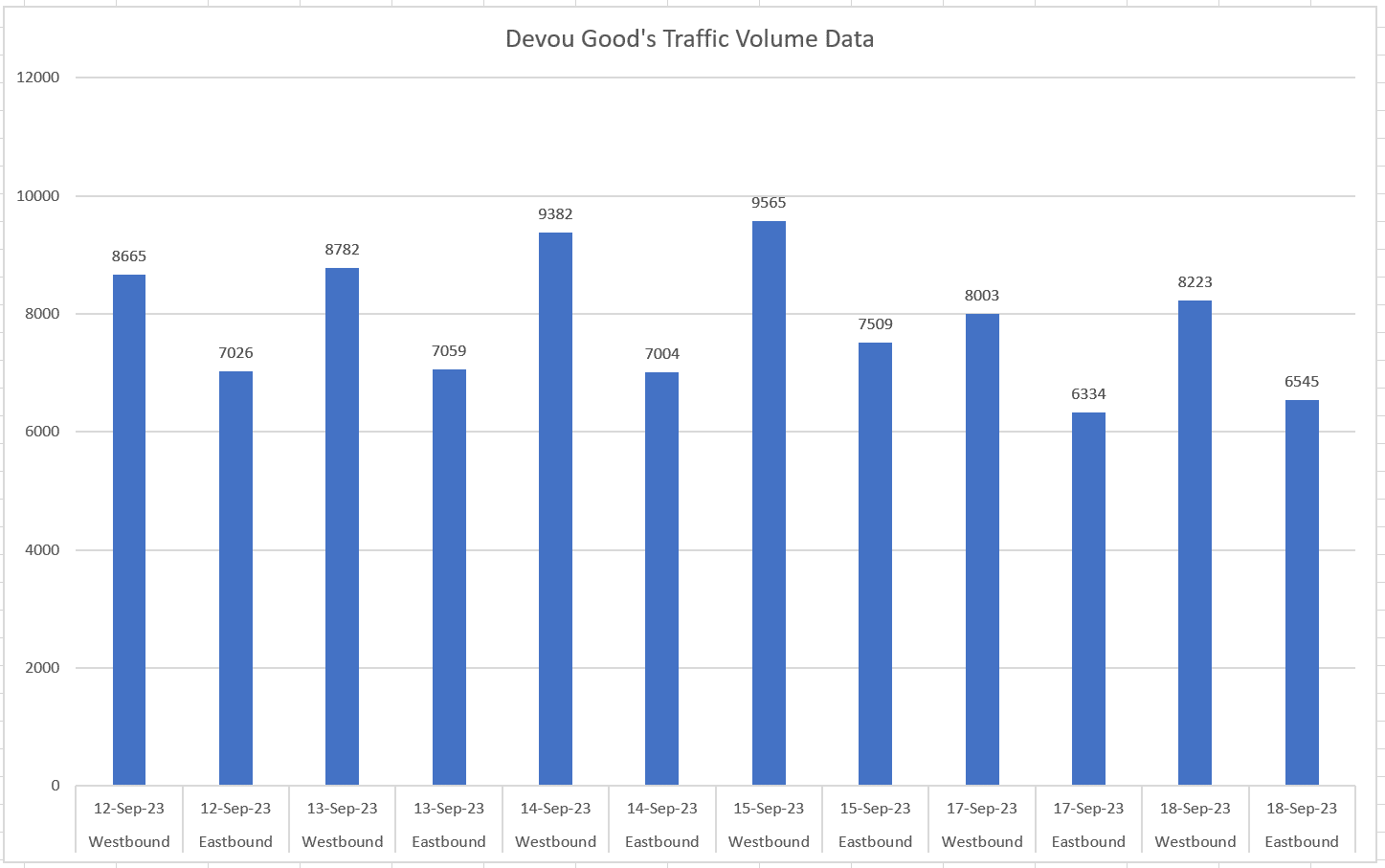
Butler and others have argued that the new development at Ovation and the IRS site, coupled with the area’s population growth trends, won’t generate enough new traffic to bring the count back up to its 1999 peak. If anything, Butler argued, adding a fourth lane might induce traffic demand.
“We know through data and research that you can induce demand for more vehicles,” Butler said, “or you can induce demand for other alternative sustainable transportation. By adding the fourth lane, what [the cabinet is] saying is, we’re going all in for more vehicles, and that’s going to be more air pollution, more sound pollution, more pollution into the Licking River, as well…”
The transportation cabinet, on the other hand, insisted that this was a misreading of the data.
When asked point blank if the cabinet expected traffic counts to go up, cabinet Project Manager Mike Bezold’s response was unambiguous.
“Yes,” Bezold said.
Bezold discussed the methodology for predicting traffic counts with LINK nky later in September. The scoping study pulled from a complex, mathematical data model from the Ohio, Kentucky and Indiana Regional Council of Governments, often shortened to OKI.
“It is a traffic demand-based model,” Bezold said. “So they have all of the existing traffic numbers for the OKI region: three Northern Kentucky counties, the Indiana county and three counties in Ohio… It looks at where people are working, where their employment is, where developments are occurring, and that’s how the OKI model functions.”
Bezold said that the statement about three lanes came from meeting minutes and did not necessarily represent the attitude of the cabinet generally. Moreover, he points to text in the 2016 study, on page 36, which states that the Ovation development was not accounted for in initial projections using OKI’s model. Thus, he argued, speculations that traffic was unlikely to increase misunderstood the cabinet’s methods.
“If you project that traffic number out 100 years if it’s a flat line,… it isn’t showing any growth. That would not show the need for any additional capacity,” Bezold said.
However, when you start adding new weights and variables to the projection, such as newer developments, Bezold said, the projections start to change.
“When you put additional growth, a concert venue, it starts shooting up,” Bezold said. “You put a IRS site in there, it shoots up. You put a another couple 100 condos on the Ovation site, and that number starts shooting up the traffic projections.”
“That’s correct,” said Robert Koehler, OKI’s deputy executive director.
Koehler declined to comment on the cabinet’s or the foundation’s positions but did discuss OKI’s methodology, confirming that additional developments on either side of the river would have an effect on any simulation run using the council’s model.
Koehler said the model is a regional model, one aimed at analyzing broad systemic phenomena rather than the granular details about particular roadways.
What’s more, Koehler said, OKI’s model alone couldn’t actually run simulations on specific roads and corridors. Instead, engineers can furnish various algorithmic inputs and use the model to run their own simulations on their own software.
“It may well be that you could have a certain number of lanes that either one of these folks said was really what is the right size,” Koehler said, describing how such a simulation might turn out.
“It might be three lanes,… but a raw figure that might come from a regional model might say, you need four lanes,” Koehler continued. “But, in fact, if you did certain things, and you tested those in the simulation model, you might be able to get by with a smaller footprint, but that’s not something that OKI did the analysis on.”
Stantec, the engineering firm that used OKI’s model to predict traffic in the 2016 study, did not respond to inquiries to comment. Koehler said that he had worked with Stantec in the past, however, and tended to respect their judgment of things.
“You’ve got to use your engineering judgment, get all the information you can get,” Koehler said. “You don’t want to over build, but you don’t want to under build either, especially on a river crossing. It’s not like downtown where you could take parking off of one street if you really needed to.”
Another issue that’s come up is the prospect of light rail or a street car on the bridge. Devou Good has argued that rail would be more environmentally friendly and would integrate well into future public transport infrastructure. To that end, Butler argued that the cabinet could install something called a sacrificial slab, a section of pavement that can be temporarily used for car traffic and then removed to make room for rail infrastructure in the future. Beth Fennell, a Newport city commissioner, has also expressed interest in a street car on the bridge.
The cabinet has maintained, however, that the prospect of rail on the bridge is unlikely. At the Brent Spence event in August, Bob Yeager, the Kentucky Transportation Cabinet District 6’s chief engineer, said that if there was going to be any railway in the region, it would not start on the 4th Street Bridge but would instead go from Cincinnati/Northern Kentucky Airport to downtown Cincinnati.
When asked if OKI had plans for light rail in its regional transport plans, Koehler said, “We have no plans now,” but they did support regional expansion of rapid bus transit.
New information
Shortly after the release of the bridge’s final design, the cabinet released updated traffic forecasts for the corridor, which more thoroughly accounted for potential traffic from the IRS site and Ovation. It projected traffic counts out to 2045, predicting a general increase in traffic counts, at least on the Kenton County side.

When asked what he thought of the new numbers, Butler said that they only seemed to account for westbound traffic on the Kenton County side. He also maintained that based on the foundation’s surveying efforts, large segments of the community were displeased with the plans for the bridge.
“What people in the neighborhood on both sides say is, ‘We don’t want more traffic. We don’t want the pollution that comes with it. We don’t want the noise that comes with it. We don’t want the danger that comes with it, and we don’t want to have to cross an additional lane of traffic because we like to walk around in our neighborhood,’” Butler said in January.
Read both the cabinet’s complete 2016 study, the more recent 2023 projections, information on OKI’s transportation planning and Devou Good’s data collection from September by clicking the links below. You can view more documents on the bridge project itself and leave public feedback at ky8bridge.org.