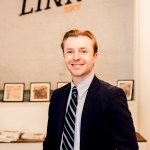

Northern Kentucky Chamber of Commerce Chief Operating Officer Gene Kirchner believed he was in the clear.
Having experienced no symptoms, he was surprised to learn that his primary care doctor recommended seeing a cardiologist. He was about to go on a vacation to Africa, and the extra doctor visits could disrupt that plan.
Nevertheless, Kirchner sought out a cardiologist, who left him with shocking news. Kirchner was diagnosed with mitral regurgitation, a condition where the mitral valve of the heart does not close properly. To fix the condition, he required surgery.
“It’s shock, you know, they start talking about heart surgery and you’re like, ‘whoa, I’m not sick–I have no symptoms,” he said. “It’s, it’s definitely one of those things that set you back and makes you really, really concerned.”
Kirchner required a procedure known as Totally Endoscopic Cardiac Surgery, pioneered by Dr. Mario Castillo-Sang at St. Elizabeth cardiac surgery. Castillo-Sang told LINK nky that the procedure is generally less invasive than earlier techniques and involves using much smaller incisions compared to traditional open-heart surgeries.
Minimally invasive surgeries that require small incisions make it difficult to pass instruments and devices. Typically, surgeons used 2D scopes, but the tools lacked the depth perception needed for accuracy. The shift to 3D endoscopic imaging restored that perception, enabling much more precise and efficient movements.
Ultimately, Castillo-Sang successfully operated on Kirchner, who, after rehabilitation, returned to his normal schedule. Castillo-Sang and Kirchner reconnected at the St. Elizabeth’s Cardiac Care Symposium on Sept. 4 in Erlanger.
Kirchner, a keynote speaker who kicked off the symposium, explained to the audience of surgeons and medical professionals how Castillo-Sang’s surgery changed the trajectory of his life. This was a pivotal moment for Castillo-Sang, who sought to convey the human experience of being a patient undergoing complex surgery.
“I wanted Gene to come in and really tell the story from the patient,” he said. “Meaning, for us (surgeons), we become technocrats when we talk about these operations–talking about how to deliver an operation, but he’s talking to us about the consequences of that operation, and centering the attitude and the demeanor of the audience into one of respect.”
The symposium included surgeons from 38 countries outside the U.S., along with prestigious domestic healthcare institutions such as the Cleveland Clinic, Penn Medicine and Northwestern Medicine.
Kirchner told the audience that he hoped they would apply the knowledge gained from the symposium to their own practices.
“I hope your experience here inspires you to go back to your countries and to other parts of our country and give the gift to as many people as possible,” he said.
Moreover, Castillo-Sang stated that hosting a prestigious cardiac care symposium shows the medical community that St. Elizabeth is at the forefront of cardiac surgery. He described the opportunity to host the event as “seismic.”
“It’s seismic. That’s the word seismic,” he said. “It’s the way I would describe it in multiple facets. For patients, it means that St. Elizabeth is really pushing the envelope and allowing more patients, whether under their care or in adjacent areas, to get access to this less invasive form of surgery that is safe and effective. The second is that we are the focal point today in the world of cardiac surgery.”